
Introduction
There’s something magical about a baby’s first steps. Those wobbly movements, wide-eyed curiosity, and the proud smiles they bring to a parent’s face mark a deeply emotional milestone. As your infant begins to explore the world upright, it’s natural to want to support and encourage every step—literally. That’s when many parents start searching for the perfect baby walker to aid this exciting phase.
But here’s where the confusion often begins: Should you choose a push walker or a seated walker? This choice, seemingly simple, is wrapped in layers of debate, conflicting opinions, and developmental concerns. While one promises entertainment and mobility, the other is praised for encouraging a natural walking progression.
This comprehensive guide dives into the push walker vs. seated walker discussion with one aim—to help you make an informed, developmentally sound choice for your child. With expert input, safety advice, and real-world recommendations, Dondo’s trusted review team breaks down everything you need to know. Whether you’re a first-time parent or navigating babyhood once more, this evidence-based resource will walk you through it all.
What Are Push Walkers and Seated Walkers?
Before diving into benefits and safety, it’s essential to understand the basic types of baby walkers available: push walkers and seated walkers.
Push Walkers, also known as walk-behind toys, are designed for babies who are starting to stand and take supported steps. They usually come with a sturdy handle for gripping and a wide base with wheels. Many models feature interactive panels, musical buttons, shape sorters, or mirrors to add fun and stimulation. Some wooden versions focus purely on support and stability, offering a more minimalist design.
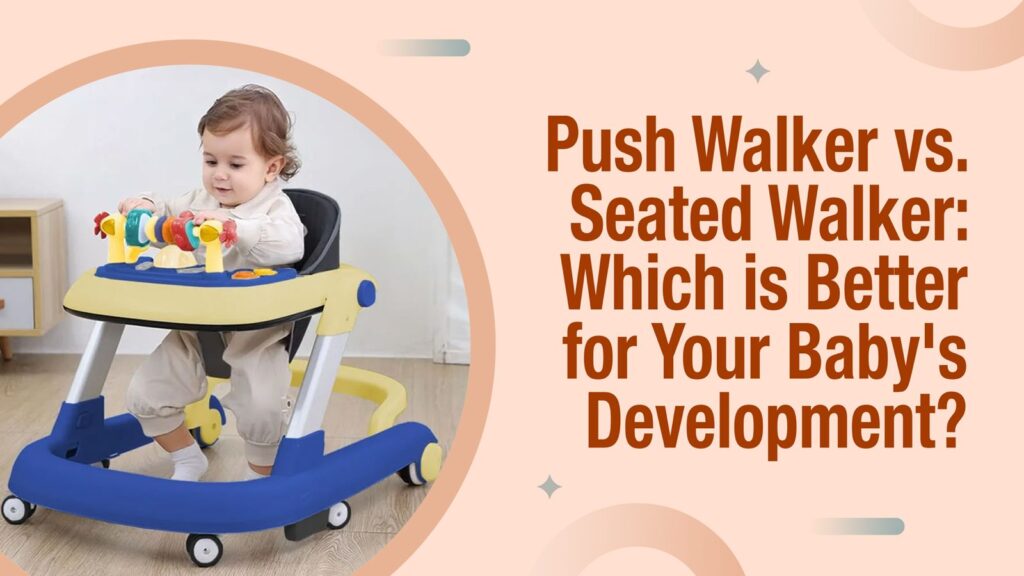
Seated Walkers, on the other hand, are designed with a built-in suspended seat, allowing the baby to sit while moving themselves around by pushing off with their feet. These often resemble a round frame with wheels and include activity trays or snack areas to entertain the baby. They are more suitable for babies who can sit up unassisted but haven’t begun pulling up or walking yet.
In terms of developmental stages, seated walkers typically serve babies aged 6 to 10 months, while push walkers are more suitable from 9 months onward, depending on the baby’s physical strength and balance. Understanding this distinction is crucial for making a safe, effective choice tailored to your child’s growth.
Developmental Milestones: When is Your Baby Ready?
Choosing the right time to introduce a baby walker depends entirely on your baby’s physical development—not just their age. There are critical milestones to check before placing your little one into any walker.
For seated walkers, your baby should have strong head and neck control, and be able to sit up unassisted. These signs typically emerge around 5 to 7 months of age. However, just because your baby can sit doesn’t mean a walker is automatically appropriate. You’ll also want to ensure they have adequate trunk stability and leg strength to push themselves around safely.
For push walkers, readiness comes later—usually around 9 to 12 months. Babies should be able to pull themselves to a standing position and show signs of cruising (walking with support from furniture). The upright design of push walkers assumes a degree of balance and control that younger babies simply don’t have.
Let’s also address the popular but misleading search term: “newborn walker.” Despite its frequent appearance online, the term is a misnomer. Newborns—defined as babies under 2 months—should never be placed in a walker. They lack the physical development necessary for any upright or mobile device. What might these searchers actually need? Likely alternatives include interactive play mats, tummy time stations, or bouncers that support sensory and motor development without compromising safety.
Developmental Benefits of Push Walkers
Push walkers are widely recommended by child development experts for their ability to support a baby’s natural walking process. Unlike seated walkers, they encourage the upright posture and coordinated leg movements needed for true walking.
- Support for Upright Walking and Posture: Push walkers help babies build confidence as they transition from crawling to walking. Because they walk behind the device while holding a handle, it fosters a more natural gait and alignment compared to being suspended in a seated device.
- Muscle Strength and Coordination: With push walkers, babies use their legs and core muscles to move forward. This builds strength in the lower body while improving overall balance and coordination—key components in learning how to walk independently.
- Cognitive Development Through Interactive Features: Most push walkers are equipped with musical panels, buttons, lights, and textures that provide cognitive stimulation. Babies learn about cause and effect (press a button, hear a sound) while practicing fine motor skills like gripping and pointing.
- Boosting Independence and Exploration: A push walker gives babies a greater sense of autonomy. They decide when and where to go (within a safe zone), which fosters decision-making, curiosity, and early problem-solving.
- Complement with a Play Mat Infant: Play mats remain essential even as babies grow. Used alongside a push walker, a play mat infant setup can provide safe ground play that builds core strength and sensory awareness in the early months.
Developmental Benefits of Seated Walkers
While seated walkers are often more controversial, they can offer certain benefits—especially when used safely and in moderation.
- Movement for Younger Babies One of the primary appeals of seated walkers is that they allow babies who aren’t yet ready to stand or walk on their own to experience some level of mobility. For parents, this means their infant can explore and play while staying contained.
- Engaging Entertainment and Brief Containment Seated walkers often come with activity trays featuring lights, sounds, spinners, and mirrors. These features not only keep a baby engaged but also stimulate the senses and support early learning. For short durations, they can give caregivers a much-needed moment to tend to other tasks.
- Early Motor Skill Development Although not ideal for learning to walk, the motions used to scoot and pivot in a seated walker still require coordination. Some seated walkers also encourage upper-body development through reaching and grabbing at toys.
- A Word of Caution Despite these benefits, overuse of seated walkers may promote toe-walking or hinder proper gait formation if used excessively. That’s why many pediatricians recommend limiting use to short, supervised sessions.
Explore Further: For a detailed breakdown on safe walker use, visit our full baby walker guide.
What Pediatricians and Experts Say
Pediatricians and child development specialists have expressed clear, science-backed perspectives on the use of baby walkers—especially seated ones. While not universally banned, walkers are not always recommended as developmental tools.
- American Academy of Pediatrics (AAP) Guidelines The AAP has long advised against the use of seated baby walkers, citing increased risk of injuries such as falls, head trauma, and stair accidents. Additionally, studies suggest that prolonged use may delay crawling and walking by encouraging unnatural movement patterns.
- Endorsement of Floor Play Experts overwhelmingly agree that the best environment for developing walking skills is a safe, open floor. Crawling, rolling, cruising along furniture, and supported walking with parents are all better for muscle development, coordination, and spatial awareness.
- Push Walkers: A Preferred Alternative When used with supervision, push walkers are viewed more positively. Because they promote upright walking with active muscle use, many developmental therapists and pediatricians consider them a safer, more effective tool—especially for older infants.
- Safety and Supervision Over Devices Ultimately, pediatricians stress that no device replaces the need for floor play and caregiver interaction. Any baby gear, whether a walker or jumper, should be used sparingly, with close adult supervision, and never as a replacement for hands-on learning.
This expert perspective should guide parents in not just choosing a walker—but understanding how, when, and why to use one.
Safety Considerations: What Every Parent Needs to Know
While baby walkers may offer developmental stimulation and freedom of movement, safety remains a top concern for both types—particularly seated models.
Common Risks to Be Aware Of: Falls down stairs, tipping over, and increased access to hazardous objects like hot surfaces or sharp edges are among the top incidents reported with baby walker use. The American Academy of Pediatrics even advocates for a ban on seated walkers due to these risks.
Features to Look For in Safe Walkers: To minimize risks, always look for the following features:
- A wide base that prevents the walker from fitting through doorways or tipping easily
- Rubber grips or friction strips that help prevent sliding on smooth floors
- Wheel locks or speed-reducing mechanisms
- Materials that are non-toxic and BPA-free, especially in parts the baby may chew on
- Rounded edges and absence of detachable small parts that could pose choking hazards
Certification and Compliance Look for walkers that comply with international safety standards such as:
- ASTM F977 (U.S. standard for infant walkers)
- EN 1273 (European standard)
- ISI Mark (Indian Standards Institute) These certifications indicate that the product has passed critical tests for stability, strength, and chemical safety.
Safe Usage Practices Even the safest walker should always be used responsibly:
- Always supervise your child when they are in a walker
- Keep them away from staircases, pools, kitchens, and fireplaces
- Only use walkers on flat, even surfaces
- Limit walker time to 15–20 minutes per session
- Regularly check for wear, damage, or loose parts
Push vs. Seated Walkers: Pros, Cons, and Comparison
With both types offering unique advantages and caveats, it’s important to weigh their strengths side-by-side. Below is a simplified comparison to help guide your decision:
| Feature | Push Walker | Seated Walker |
| Best Age Range | 9–18 months | 6–10 months |
| Mobility Type | Baby pushes while walking upright | Baby scoots while seated |
| Muscle Development | Strong emphasis on leg and core strength | Some leg movement, limited engagement |
| Posture Support | Encourages natural upright posture | May encourage toe-walking if overused |
| Cognitive Engagement | Activity panels encourage exploration | Built-in trays offer entertainment |
| Safety Concerns | Tipping if misused | Higher injury risks (falls, collisions) |
| Parental Supervision | Required | Required |
Which is Better for Development? Push walkers are generally more aligned with natural motor development and are viewed more favorably by experts, especially for older infants. Seated walkers can serve short-term entertainment and mobility purposes but should be used cautiously and not as a primary tool for walking development.
Dondo’s Top Picks: Best Push & Seated Walkers of 2025
Dondo’s review team has analyzed the latest models for 2025 based on safety, developmental value, design quality, and real-world parent feedback. Here are our top recommendations:
Best Push Walkers
- VTech Sit-to-Stand Learning Walker
- Pros: Highly interactive with lights, music, shape sorters, and number buttons
- Cons: Lightweight – can move too fast on hardwood floors
- Best For: Babies just starting to walk with assistance
- Melissa & Doug Chomp and Clack Alligator Push Toy
- Pros: Solid wood construction, gentle clacking noise to encourage motion
- Cons: No brakes or wheel resistance
- Best For: Toddlers who already pull to stand and need more balance practice
Best Seated Walkers
- Joovy Spoon Walker
- Pros: Sleek design, extra-wide base, machine-washable seat pad
- Cons: Fewer toys; more functional than playful
- Best For: Parents prioritizing safety and simplicity
- Baby Einstein Around We Grow 4-in-1 Discovery Center
- Pros: Converts from seated walker to stationary activity center
- Cons: Takes up more space than standard models
- Best For: Families looking for long-term value and multifunctionality
3. Tiny Love 4-in-1 Here I Grow Activity Center
- Pros: Multiple modes including stationary and push walker
- Cons: Setup takes time; not ideal for tight spaces
- Best For: Parents who want a convertible all-in-one solution
Smart Use of Baby Walkers: Tips for Parents
Using a baby walker—whether push or seated—requires thoughtful and safe implementation. Here are some key tips to ensure your baby’s development isn’t compromised:
- Always supervise. Never leave your baby unattended in a walker, even for a minute.
- Limit usage. Keep sessions brief—about 10 to 20 minutes at a time, twice a day is sufficient.
- Set up a safe space. Use the walker only on flat, even surfaces with no stairs, cords, or sharp corners nearby. Baby-proof the area beforehand.
- Maintain balance. Encourage plenty of time outside the walker for crawling, tummy time, and floor play.
- Regular maintenance. Clean the walker regularly and inspect for signs of wear, loose parts, or broken components.
- Height matters. Make sure the walker’s height setting matches your baby’s leg length so they’re not tiptoeing.
Alternatives to Baby Walkers
Walkers aren’t the only option to help your baby develop mobility and coordination. Here are some great alternatives:
- Play Mats: Soft, interactive mats are ideal from the newborn stage for practicing reaching, rolling, and crawling.
- Push Toys: For older babies, push toys offer the same benefits as push walkers but in fun shapes like shopping carts or animal designs.
- Tummy Time Stations: Tummy time supports head control, muscle development, and motor coordination.
- Stationary Activity Centers: These offer sensory play and upright posture without wheels, reducing risk of falls.
- Parent-Assisted Walking: Holding your baby’s hands while walking together builds confidence and coordination.
These options support development without compromising safety, especially for younger infants or those not yet ready for a walker.
Conclusion: Development-First, Not Trend-First
Choosing between a push walker and a seated walker is not just about aesthetics or brand—it’s about aligning with your baby’s developmental needs. Push walkers generally support natural muscle and motor development more effectively, while seated walkers offer short-term entertainment but may carry more risks.
What matters most is how these tools are used. A well-supervised, limited, and age-appropriate approach can make both walker types beneficial. With expert insights, Dondo’s honest reviews, and your parental instincts, you can make a smart, confident choice.
Next Step: Explore Dondo’s full guide to the safest, most development-friendly baby walkers of 2025.
FAQs
1. Can babies use both types of walkers? Yes, depending on their developmental stage. A seated walker might work earlier, with a transition to a push walker as they begin standing.
2. Are push walkers better for walking development? Generally, yes. They support upright posture, muscle strengthening, and balance in ways that mimic natural walking.
3. When is it safe to introduce a baby walker? For seated walkers, once a baby can sit up unassisted (around 6 months). For push walkers, once a baby can stand and cruise (usually 9+ months).
4. How long can a baby use a walker each day? Limit walker use to 10–20 minutes at a time, 1–2 sessions daily, to avoid fatigue or developmental disruption.
5. Are baby walkers banned anywhere? Yes. For example, Canada banned the sale of baby walkers due to safety concerns. Many pediatric groups discourage their use.
6. What are safer alternatives to baby walkers? Play mats, tummy time, parent-guided walking, push toys, and activity centers are excellent alternatives that promote healthy movement without added risk.
Check out other posts on baby walkers and play mats for infants.