
Introduction
For new parents, few things provoke as much anxiety as car travel with a newborn. You’ve read the manuals, watched the tutorials, and double-checked the straps—but you still wonder: Is my baby truly safe in the car?
That’s completely normal. Car crashes remain a leading cause of injury for children under 4, yet over 59% of infant car seats are installed incorrectly, according to the American Academy of Pediatrics. These statistics are not meant to scare—they’re meant to empower you.
This guide walks you through exactly how to install a car seat for infants, helping you avoid common mistakes while giving you confidence for every journey. With expert tips from Dondo, plus the latest in baby car safety innovations, we’ll simplify the overwhelming task of infant car seat installation into clear, manageable steps.
What is an Infant Car Seat?
An infant car seat is a rear-facing seat designed specifically for babies from birth to around 12–15 months (depending on the weight and height limits). The seat includes two components:
- A portable carrier, often with a handle, and
- A stay-in-car base that secures via a seatbelt or LATCH system.
These seats are specially shaped to support a newborn’s head, neck, and spine, with padded inserts for extra comfort and safety.
Why Rear-Facing Matters
Rear-facing car seats protect babies during frontal collisions (the most common type) by evenly distributing force across their body. This minimizes stress on the spine and internal organs, which are still fragile in infancy.
Infant vs. Convertible vs. Booster
Infant seats are portable and tailored for newborn physiology, unlike convertible models that also accommodate toddlers. Their shell shape reduces positional asphyxia risk—making them safer for first-year use. Boosters are intended for much older kids and offer no support for an infant’s neck or spine.
Note: Infant car seats are not sleep surfaces. Avoid using them outside the car for prolonged naps, especially unattended. Always transfer baby to a crib or bassinet—never treat a car seat as a substitute for a sleeper.
Why Car Seat Use Matters in India & Emerging Markets
In India, only around 15% of cars are equipped with manufacturer-installed seat belts in the back seats. That means most infants are unrestrained or improperly seated—alarmingly increasing their risk in even low-speed collisions.
- A baby in an adult’s lap may experience forces up to 100 times their weight during a crash, even at 40 km/h.
- Vehicle collisions in India commonly occur—especially during city commutes and rural drives—making every trip risky without proper child restraint.
Public awareness, stricter traffic enforcement in urban areas, and increased access to affordable, certified infant car seats are gradually improving safety—but there’s much to do.
Recommended action: Parents must prioritise certified seating and correctly install it for every single ride, not just long drives. Even short journeys, like a school pick-up, carry risk.
Car Seat Safety Standards
Global Crash-Test Certifications
Look for certifications such as:
- FMVSS 213 (USA)
- JPMA Certified
- ECE R129 (i-Size) (Europe)
- AIS-072 / IS 15546 (India)
These standards ensure the seat passes crash simulations, side-impact resistance, and harness durability tests.
LATCH vs. Seatbelt: Which is Better?
- LATCH (Lower Anchors and Tethers for Children) is easier to install but isn’t inherently safer.
- Weight limits matter: Don’t use LATCH if combined seat + baby weight exceeds 65 lbs.
- Seatbelt installs, when done correctly, are just as secure.
Always refer to both the car seat and vehicle manual.
Expiration & Recalls
- Car seats expire 6–10 years from manufacture.
- Register your seat to receive recall alerts.
- Avoid buying second-hand seats without full history.
Step-by-Step Installation Guide
1. Read Every Manual – Twice
Most insist on using both the seat and vehicle manuals. Certain cars have unique seat belt locking mechanisms or unusual anchor placements—knowing them prevents errors.
2. Choose the Safest Spot
Install the seat in the rear middle seat if possible—it offers the greatest buffer from impacts. If not, either rear side seat works well—but ensure side airbags won’t cause pressure on the seat.
3. Secure the Base
- LATCH: Loop the belt around the base, then buckle the lower anchors.
- Seatbelt: Thread through the “European sling” or dedicated belt path—even if using LATCH in the other car.
Press firmly (kneel if needed), pull tight, and confirm less than 1-inch movement at the belt path.
4. Check Recline Angle
An inclined seat helps maintain an airway and head support. Use the installed bubble/ruler leveler, and adjust feet or base extension if the car seat is on steep seats.
5. Lock Carrier
You should hear a loud click. Pull the handle forward to double-check the carrier is locked before releasing. Wiggle test should show only minimal movement.
6. Secure the Harness
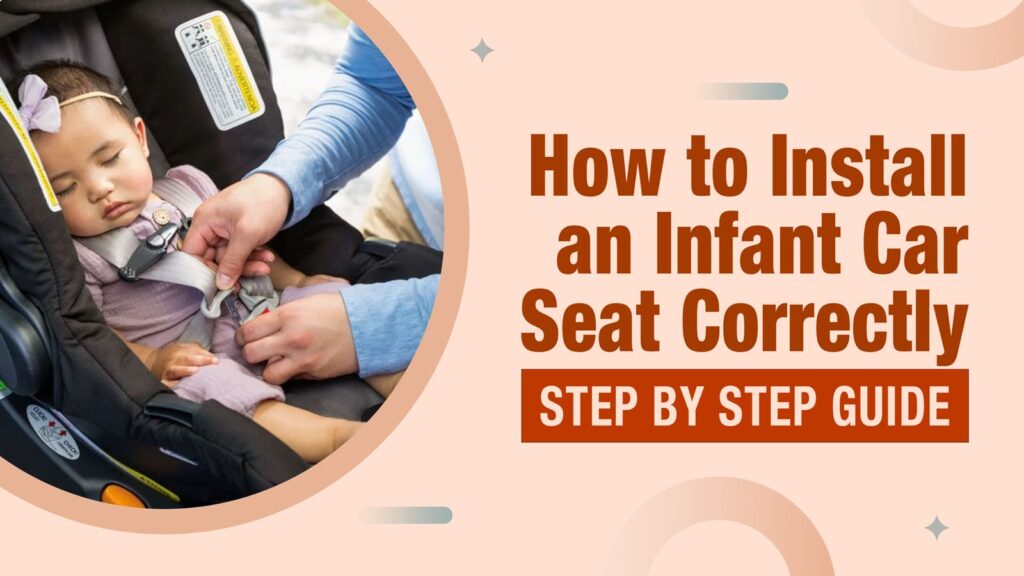
Place the baby, compress the padding, tighten straps snugly (pinch test). Slide the chest clip to armpit level—never near the stomach or neck.
Common Mistakes Parents Make
1. Harness Twisting
Twisted straps compress unevenly and reduce crash protection. Always smooth each strap individually.
2. Installing in Glove Compartment
Some cars have fuel cut-off devices or hazards beneath seats—check under the install area first.
3. Not Tracking Recalls
Seat parts and tether components have failed in older models. An unregistered seat could go unnoticed during a recall.
Pro Tip: Watch official install videos (NHTSA, Babylist, or manufacturer sites) to visualize the steps.
Common Mistakes Parents Make
Even well-meaning parents make these:
Loose Harness Straps
Use the pinch test: no slack = secure fit.
Chest Clip Too Low
It should sit at armpit level. Too low = injury risk.
Wrong Recline
A seat too upright risks airway restriction; too flat reduces crash protection.
Coats Under Harness
Bulky coats make the harness ineffective. Use thin layers and tuck a blanket over the straps.
Aftermarket Add-Ons
Only use inserts included by the manufacturer. Third-party products can void crash safety.
Choosing the Right Car Seat
Key Factors to Consider:
- Age and Size: Choose a seat that suits your baby’s weight/height range.
- Vehicle Compatibility: Test fit before buying, especially for compact cars.
- Ease of Installation: Look for bubble levels, click sounds, and no-rethread harnesses.
- Lifestyle Needs: City parents may prefer a lightweight seat, while suburban families might prioritize stroller compatibility.
- Extra Convenience: Consider add-ons like extra bases for second cars, UV canopies, or space to fit inside Diaper Bags during travel
- Family Travel Patterns:
- Frequent flyers or cross-country parents: Look for airplane-certified seats (Mesa V2, PIPA ULB) and lightweight carriers.
- Ride-sharing families: A second base or baseless installation capability is useful for taxis like Uber or Ola.
- Multiple cars at home: Evaluate whether buying two bases (and moving the carrier) is worth it.
- Sibling Plan: If you have older children, a seat that converts to a booster later, or a surviving car seat compatible with your stroller, adds value
How to Transition to a Toddler Seat
When your child outgrows the rear-facing weight/height limits (usually 35–40 lb), check this plan:
- Start with a bigger rear-facing convertible — follow height/weight limits on the seat and ensure a correct install with a belt path or LATCH.
- Re-check every 3 months — harness levels, clearance and angle may change as your child grows.
- Forward-facing only when they exceed limits — delay until they pass the rear-facing max, and move to 5-point harness forward-facing seats.
- Avoid belt-positioning boosters until they are at least 4 ft 9″ and 8–12 years old — per global child safety guidelines.
Top Infant Car Seats of 2025
Best Overall: Chicco KeyFit 35
- Recline indicators and zip-out covers for easy cleaning
- Reliable rigid LATCH system
- Compact enough to fit in small sedans
“It clicks so confidently into place. I trust it completely,” —Tanya, mom of 3-month-old twins
Best Lightweight: Nuna PIPA urbn
- Premium merino lambswool insert for temperature regulation
- Optional oversized canopy for sun protection
- Lifetime anytime-replaceable parts
“I flew with it three times last month. Total lifesaver for city life,” —Arun, Mumbai
Best for Small Cars: Clek Liing
- Locking fold-down handle lets it lie flat in the car
- Metal energy-absorbing crumple technology redirects crash forces
- Australian-toned aesthetics with colour choices
Best Travel System: UPPAbaby Mesa V2
- SmartSecure system: clicks red = not tight, clicks green = locked
- Adjustable infant insert caters to growth
- Side-impact tested with deep foam pockets
Comparison Table
| Feature | KeyFit 35 | PIPA urbn | Clek Liing | Mesa V2 |
| Weight Limit | 4–35 lbs | 4–22 lbs | 4–35 lbs | 4–35 lbs |
| Install Option | Base + LATCH | LATCH + Baseless | Base + Rigid | Base + LATCH |
| Travel Friendly | Medium | High | Medium | High |
| Best For | General Use | City Life | Small Cars | Full Systems |
Pro Tips for Safe Car Seat Use
- Use the pinch test every ride.
- Keep the chest clip at armpit height.
- Avoid second-hand seats unless you confirm expiration and crash history.
- Keep essentials like Diaper Bags and a milk bottle newborn-ready for smooth car travel.
Alternatives for In-Car Baby Travel
Though not primary options, these can be helpful:
· Travel Bassinets
- Useful outside the car, not crash-tested for in-vehicle use.
· Convertible Car Seats
- Grow with baby, though bulkier and not ideal for quick transfers.
· Rear-Facing Strollers
- Stroller frames that accept car seats offer travel flexibility for short outings.
Conclusion
Installing a car seat for infants isn’t just a parenting task—it’s a commitment to safety. With proper installation, smart product choice, and awareness of common pitfalls, you’re giving your baby the safest possible start in every journey.
Dondo is proud to guide new parents through this process with evidence-based tips and product insights. Explore our reviews and travel gear to build your complete car safety kit.
FAQs
Q1: How tight should the car seat straps be?
Snug enough that you can’t pinch the fabric. Adjust every ride.
Q2: Can I install without the base?
Yes, many seats allow seatbelt-only installation. Always check manual for the correct path.
Q3: How do I know the seat is reclined correctly?
Use the built-in level or bubble gauge—it should indicate green when safe for newborns.
Q4: When should I switch to forward-facing?
Not before 2 years, and ideally after outgrowing rear-facing height/weight limits.
Q5: How do I clean a car seat for infants?
Remove covers and machine-wash per instructions. Use baby-safe wipes on plastic parts.
Q6: Are car seats airline-approved?
Yes—look for the FAA certification sticker and notify the airline in advance.
Q7: Can I use mirrors to check baby?
Yes, as long as they’re shatterproof and don’t obstruct your view.
Q8: How can I keep baby cool in summer?
Use window shades, dress baby in breathable clothes, and keep airflow open.
Q9: What if my baby cries every time they’re in the car seat?
Try soft music, white noise, or a favorite toy. Ensure straps aren’t too tight and baby isn’t too warm.
Q10: Can I reuse a car seat for my second baby?
Yes, if it hasn’t been in a crash, is within expiration, and all parts are intact.
Q11: When can I leave padding inserts in the seat?
Use only manufacturer-approved newborn inserts, and remove them once the baby’s head reaches the top of the shell.
Q12: Can I swap seats between cars frequently?
Yes—just check level, LATCH/seatbelt locks, and re-tighten every transition.
Q13: Is it safe in very hot or cold climates?
In heat, never leave your baby strapped unattended—metal harnesses heat up quickly. Use thin cotton and breathable fabrics. In cold, unstrap, remove baby’s coat, secure them, then tuck a blanket over straps.