Introduction: The Magic of First Playtimes
“Your baby’s brain grows faster in these 6 months than ever again.”
The newborn stage may seem quiet from the outside—lots of feeding, sleeping, and cuddling—but underneath that tiny surface, a miracle is happening. In just six short months, your baby’s brain will form more than a million neural connections per second. And one of the most powerful catalysts for this incredible growth? Play.
As a parent, choosing toys that are both safe and developmentally meaningful can feel overwhelming. There’s a flood of options, many of which flash and blink but offer little lasting value. You want toys that will stimulate your baby’s senses, support early motor skills, and encourage bonding—all while being safe enough for curious hands and mouths.
That’s where we come in. This blog is your guide to the 5 best toys for newborn to 6 months, handpicked for their sensory value, safety, and long-term developmental benefit. Backed by child development science and parental feedback, every toy on this list will help turn your baby’s earliest play sessions into lasting milestones.
How Play Supports Growth in 0–6 Months
Play may look simple, but for infants, it’s serious work. The right toys in these early months support three key areas of development: cognitive, physical, and emotional.
Cognitive Growth
- Sensory exploration (touch, sight, sound) builds brain connections.
- Simple cause-and-effect games (like shaking a rattle) lay the groundwork for problem-solving and focus.
- Physical Development
- Reaching, grasping, and mouthing toys improve fine and gross motor skills.
- Rolling over, lifting the head, or kicking during tummy time builds muscle control.
Helpful Tool: A well-cushioned play mat infant provides a safe, stimulating environment for early movement and exploration.
- Emotional Connection
- Toys become tools for bonding through shared attention and interaction.
- Repetitive play helps infants feel secure, while gentle textures and sounds offer comfort.
The right toys aren’t flashy—they’re purposeful. Next, let’s explore exactly what those are.
Toys Idea for Newborn to 6 Months Kids
Toy 1: High-Contrast Soft Books
In the first three months, your baby’s vision is still developing. They see best at a distance of 8–12 inches and are most drawn to high-contrast colors—black, white, and bold patterns.
Why it’s Essential:
- Stimulates visual development
- Encourages focus and tracking
- Introduces early language as you name shapes and objects
These cloth books are lightweight, safe for mouthing, and often include crinkle textures or mirrors for multi-sensory play. They also double as great props during tummy time.
Pro Tip: Prop the book open during floor time to give your baby something to look at while building neck strength. Pair it with a cozy play mat infant for the perfect daily routine.
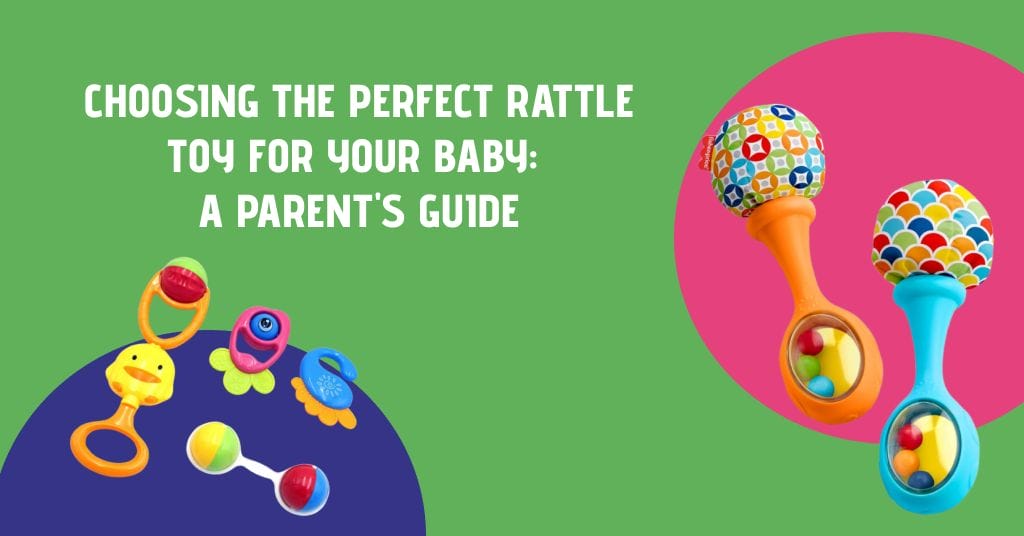
Toy 2: Sensory Balls and Rattles
Around 2–4 months, your baby begins to grasp objects, bring things to their mouth, and respond more actively to sounds. That’s where sensory balls and rattles come in.
Why They’re Essential:
- Encourage hand strength and grip control
- Provide auditory feedback when shaken or moved
- Expose babies to varied textures—smooth, bumpy, soft, firm
Choose lightweight rattles and balls that are BPA-free, phthalate-free, and easy to hold. Some textured balls also have gentle ridges or nubs, helping babies explore with both hands and mouth.
Pro Tip: Gently guide the rattle from left to right in your baby’s view to promote visual tracking—a crucial early developmental skill.
Use these toys during tummy time too—place a small ball just out of reach on a play mat infant to encourage forward movement and reaching.
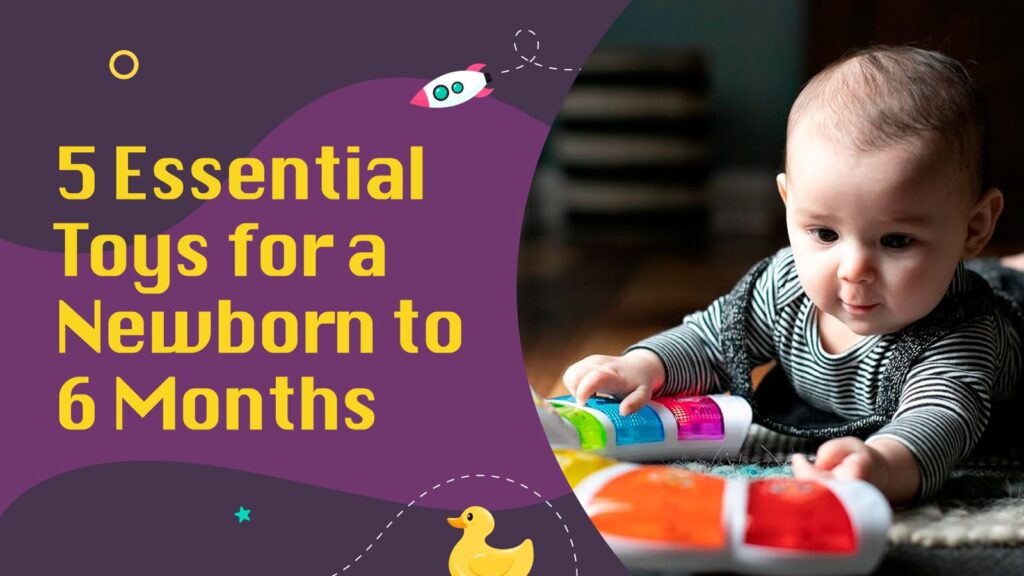
Toy 3: Tummy Time Activity Mat (with Toys)
A quality tummy time mat isn’t just helpful—it’s foundational. It provides the ideal environment for early full-body movement, and many come with built-in toys for additional stimulation.
Why It’s Essential:
- Supports head lifting, rolling, and kicking
- Includes mirrors, crinkle panels, and hanging toys to keep baby engaged
- Creates a safe, cushioned surface for movement
Look for a play mat infant that includes removable arches with soft hanging toys, or flat mats with textured zones and visual contrast.
Bonus Feature: Some mats also include music or baby-safe mirrors that encourage longer sessions.
Pro Tip: Rotate attached toys weekly to keep the environment fresh and engaging. This keeps your baby curious and extends tummy time duration—key for building strength and coordination.
Toy 4: Animal Toys for Newborn Exploration
By 3–6 months, your baby is ready to start learning through tactile exploration and early interaction. That’s where soft, squishy animal toys shine.
Why They’re Essential:
- Encourage touch-based discovery (fur, fuzz, ridges)
- Allow for naming and pointing games to build vocabulary
- Help babies begin social recognition (“That’s Mr. Bear!”)
Choose plush animal toys with stitched features (no buttons or beads) and varied textures. Many come with gentle sounds like crinkles or squeaks for added fun.
Pro Tip: Use animal-shaped toys to play “name-and-touch” games. Say, “Here’s the bunny’s ear—can you feel it?” This boosts language skills and sensory learning all in one.
Want to make it more interactive? Line up a few animal toys during play on your play mat infant and see which one your baby reaches for. You’ll be amazed at their preferences!
Toy 5: Teething Rings & Grasp Toys
From about 4 months onward, babies begin to put everything in their mouths—not just to soothe sore gums but also to learn about texture, pressure, and temperature.
That’s where teething rings and grasp toys become essential.
Why They’re Essential:
- Help relieve teething discomfort
- Strengthen hand-to-mouth coordination
- Encourage independent holding and manipulation
Look for toys made from food-grade silicone, BPA-free plastics, or natural rubber. Many are textured to massage sore gums while offering safe chewing.
Bonus Feature: Many grasp toys double as teethers and include features like easy loops for little fingers and soft ridges for chewing.
Pro Tip: Chill a teething ring in the fridge (not freezer!) before offering it—cool relief can be calming during fussy moments. These toys are also great for high-chair play or floor time on a play mat infant.
Bonus Toy 6: Mirror Play Mats or Panels
Mirrors might seem like décor for adults, but for infants, they’re one of the most powerful developmental tools.
Why They’re Essential:
- Encourage self-recognition (a major milestone by 4–6 months)
- Promote visual tracking as baby watches their own movements
- Inspire reaching, head turns, and giggles during tummy time
Opt for a soft, acrylic baby-safe mirror—many are included with high-quality play mat infant setups. You can also purchase standalone mirror panels that are padded and angled.
Pro Tip: Use mirror time in short bursts. Say things like, “Who’s that baby?” or “Wave to yourself!” This builds social awareness and helps babies connect movement with identity.
Safety Checklist for 0–6 Month Toys
When it comes to newborn toys, safety always comes first. Before purchasing or using any item, ask these questions:
- Are there no small parts that can come loose or pose a choking risk?
- Is it BPA-, PVC-, and phthalate-free?
- Can it be easily cleaned with soap and water or baby-safe wipes?
- Is the toy lightweight and soft enough for an accidental face hit?
- Are all edges rounded and stitching secure (especially on plush animal toys)?
- If the toy plays sound, is the volume under 85 dB for infant ear safety?
When in doubt, skip complex electronics or hard plastics and stick with sensory-rich, soft, and safe play
How to Rotate and Use Toys by Month (0–6 Month Guide)
Your baby’s play needs evolve each week. Here’s a guide to optimizing your toy choices for growth without overstimulation:
0–1 Month
- Focus on visual stimulation with high-contrast cards or mirrors
- Keep play short (5–10 mins) and soothing
- Tummy time is mostly skin-to-skin or on a parent’s chest
1–2 Months
- Introduce gentle rattles, soft cloth books, and plush animal toys
- Use black-white-red color palettes to support visual focus
- Start placing toys in side view to encourage head turns
2–3 Months
- Add toys with sound, like crinkle or jingle textures
- Baby will start reaching and swatting
- Use a play mat infant with toys suspended over the chest or sides
3–4 Months
- Introduce teething rings, simple grasp toys, and textured balls
- Try cause-and-effect games—like pressing a squeaker or shaking a rattle
4–6 Months
- Offer multisensory bundles: mirrors, textured panels, and soft animal toys
- Encourage independent grabbing and roll-and-reach games
- Babies will begin turning toward sounds and reaching accurately
Rotation Tip: Change toys every 4–5 days. Too many at once can overwhelm; fewer, focused choices drive better learning.
Dondo Recommends: Top 3 Toy Sets for Newborn to 6 Months [2025]
Looking for ready-made bundles that take the guesswork out of toy shopping? Here are our 2025 top picks for complete playtime sets:
Product 1: Lovevery “The Looker” Play Kit
Best Value
- Includes high-contrast cards, crinkle cloths, mirror, and grasp toys
- Montessori-inspired and pediatrician-approved
- Safe for ages 0–12 weeks
Product 2: Skip Hop Silver Lining Cloud Activity Gym
Best Sensory Set
- Combines play mat infant, mirror, textured animals, and musical elements
- Supports tummy time and full-body movement
- Machine washable, includes hanging animal toys
Product 3: Fisher-Price Baby’s First Gift Set
Best Gift Bundle
- Includes rattle, teether, soft book, and sensory blocks
- Budget-friendly and ideal for baby showers
- Grows with baby from newborn to 6 months+
Conclusion
The first six months of life are magical—and fast. Choosing the right toys for newborn to 6 months doesn’t mean buying the flashiest or most expensive items. Instead, it means selecting toys that align with how your baby’s brain and body grow: slowly, steadily, and with lots of sensory input.
From soft animal toys to a well-designed play mat infant, these essentials encourage not just smiles, but critical developmental wins. As your baby reaches, grabs, chews, rolls, and interacts, their confidence and capability blossom.
At Dondo, we believe every toy should have a purpose—and every moment should support learning, bonding, and joy.
Explore our full line of trusted developmental toys and tools to make your baby’s playtime truly powerful.
Why These Months Matter Most
The toys you choose in these first six months do more than entertain—they build your child’s brain. With every texture they feel, sound they hear, and pattern they track, millions of synapses are formed.
Studies show that interactive play during the first year improves cognitive development, emotional regulation, and physical coordination—even years later. That’s why the right tools—like a well-designed play mat infant, soft animal toys, and chewable grasp rings—aren’t just helpful. They’re foundational.
Your baby doesn’t need dozens of toys. They need a thoughtful few, chosen with love and intention. Every moment you spend interacting—reading a soft book, shaking a rattle, or naming a toy—fuels the incredible journey of early development.
With Dondo’s research-backed toy picks, you can make every moment count.
FAQs
Q: When should I introduce toys to my newborn?
A: You can start from day one! High-contrast cards and mirrors are perfect in the first month.
Q: What are the best toys for 3-month-old babies?
A: Sensory rattles, soft animal toys, and tummy time mats with mirrors or crinkles work great at this age.
Q: Are animal-shaped toys safe for infants?
A: Yes—as long as they’re lightweight, securely stitched, and free from small detachable parts. Always inspect before use.
Q: Can newborns play on a mat?
A: Absolutely. A padded play mat infant offers a safe surface for tummy time, stretches, and early sensory play.
Q: What materials should I avoid in infant toys?
A: Avoid toys with BPA, phthalates, PVC, or loose parts. Choose certified non-toxic, soft, and washable materials.
Q: What’s better—electronic toys or manual ones?
A: For infants, manual, open-ended toys are better. They allow babies to lead the play, which builds attention span, curiosity, and problem-solving. Avoid toys with too many lights/sounds early on—they can overstimulate.
Q: How do I clean and sanitize baby toys safely?
A: Wash silicone and plastic toys with warm water and baby-safe soap. For plush animal toys, use a gentle laundry cycle and avoid fabric softener. Always check manufacturer instructions and clean regularly—especially during teething phases.